Webb observations identify carbon dioxide in young giant-planet atmospheres
A March 2025 study used infrared imaging to examine the chemistry of planets orbiting HR 8799.
News report
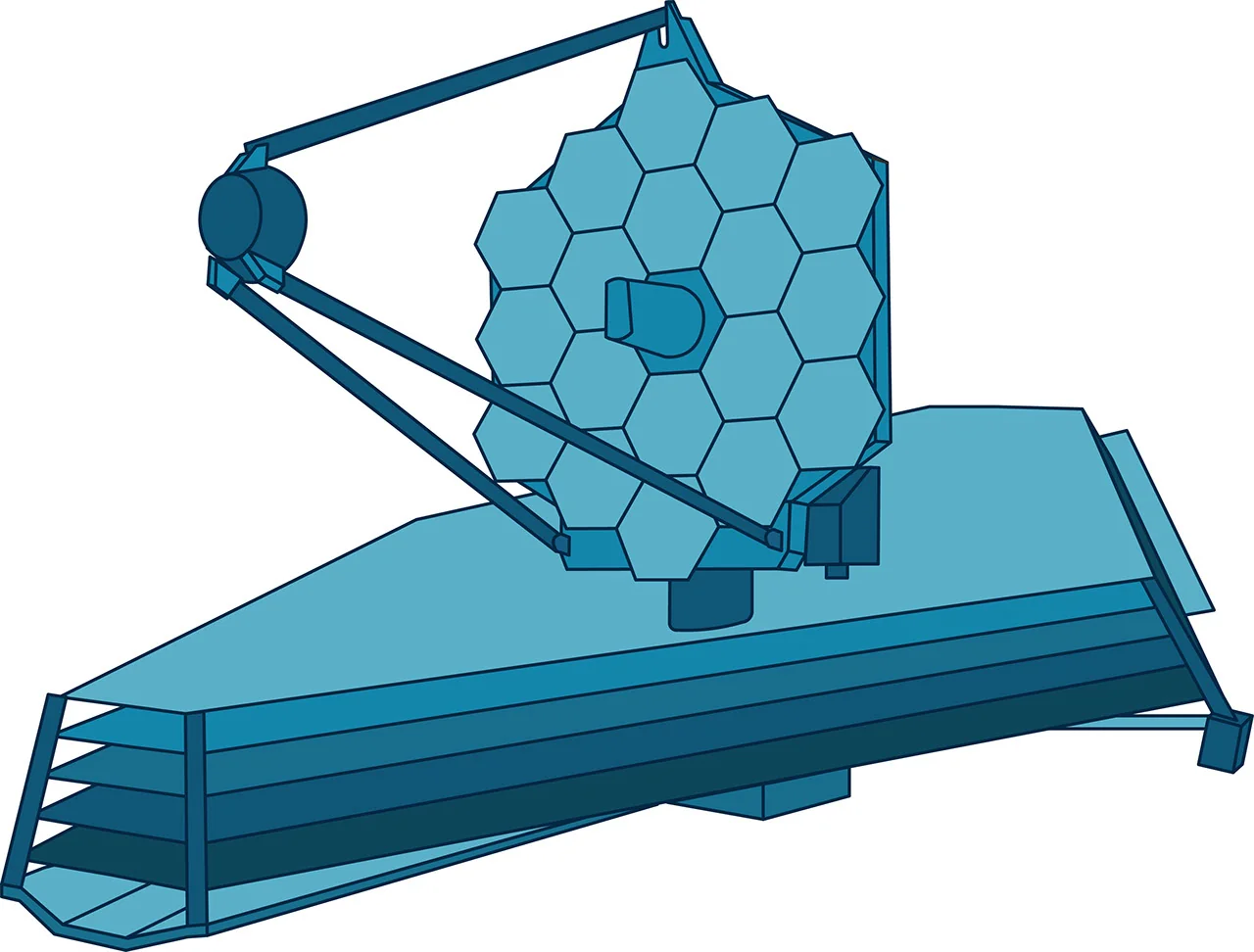
Researchers reported carbon dioxide signatures in the atmospheres of giant planets orbiting HR 8799 on March 17, 2025. The observations used the James Webb Space Telescope to study a young planetary system about 130 light-years from Earth.
The system’s four known giant planets offer a way to compare worlds that formed around the same star. Webb’s infrared camera and a coronagraph helped separate their faint light from the much brighter host star, allowing observations at wavelengths affected by atmospheric molecules.
The study found evidence that the planets contain substantial amounts of elements heavier than hydrogen and helium. The researchers interpreted that chemistry as support for formation through core accretion, in which a solid core grows before drawing in surrounding gas.
That is an inference from atmospheric measurements and models, rather than a direct observation of the planets forming. The work also examined 51 Eridani and demonstrated how targeted imaging can complement spectroscopy, another method used to study the composition of distant atmospheres.
Carbon dioxide in this setting is a clue to giant-planet chemistry, not a sign of an Earth-like environment or a detection of life. The March 2025 result expands the ways astronomers can compare planetary systems. With better measurements of several planets around one star, researchers can test ideas about how their histories are shared and where their paths diverged.